In this guide
Fine Hair Part 30: The Scalp‑Follicle Circuit – Evidence‑Based Scalp Care to Maximize Density & Volume
Moving beyond surface‑level styling tricks toward a biologically informed, long‑term routine that nourishes the root environment — where genuine density begins.
Read previous instalments: Part 29: Lightweight Styling Essentials | Part 28: Protein & Moisture Balance
Fine hair is not a flaw. It is a genetic reality shaped by follicle diameter, anagen‑phase duration and the scalp’s biochemical milieu. The encouraging news is that while you cannot change the number of follicles you were born with, you can influence the environment those follicles inhabit. This article examines the evidence behind scalp massage, topical vasodilators, microneedling, nutritional support, exfoliation strategies, stress modulation and heat‑styling habits — all filtered through the lens of fine, easily‑weighed‑down hair. Every recommendation draws on published research, clinical observations or established physiological principles, though many findings come from small studies and should be viewed as promising rather than definitive. The goal is not instant fluff; it is measurable, incremental density gain over months of consistent care.
1. Revisiting the Physiology of Fine Hair: Genetics, Follicle Shape and the Anagen Cycle
Fine hair is defined primarily by the diameter of each individual strand — typically less than 60 microns, whereas medium‑to‑coarse hair often ranges from 80–120 microns. This diameter is set by the shape and size of the dermal papilla at the follicle’s base during embryological development. A narrower follicular canal produces a finer shaft. Additionally, the anagen (active growth) phase tends to be shorter in people with fine hair — often lasting 2–4 years rather than the 5–7 years seen in thicker hair types. This shorter growth window means each strand reaches a shorter terminal length and spends proportionally more time in the telogen (resting) and exogen (shedding) phases.
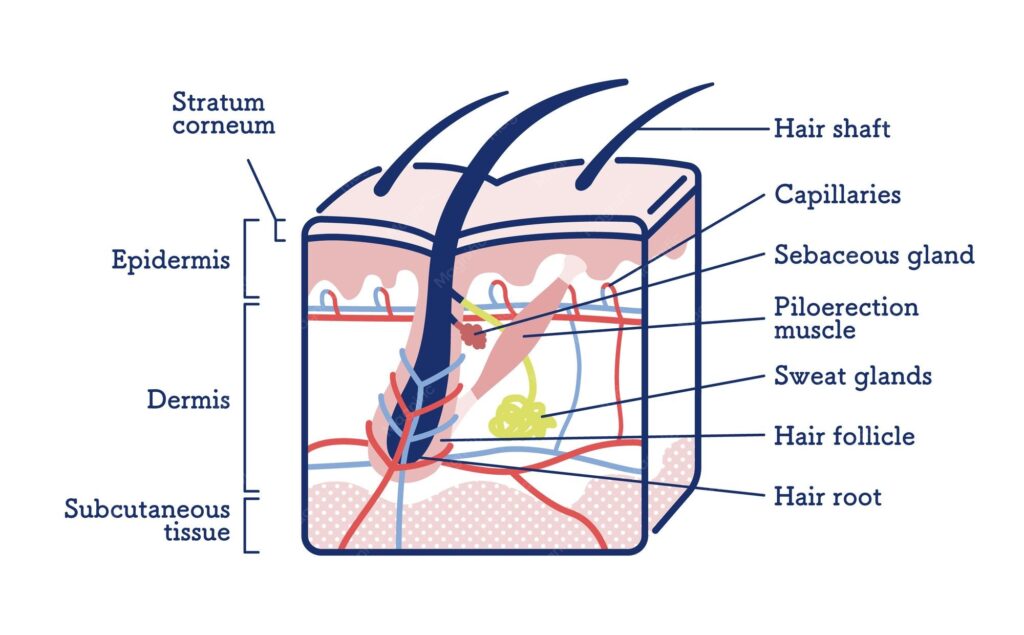
These traits are largely polygenic — inherited through multiple genes influencing follicle morphogenesis, androgen sensitivity and growth factor signalling. However, genetic predisposition is not destiny. The follicle is a dynamic mini‑organ that responds to its local environment. Blood supply delivers oxygen and nutrients; sebaceous glands provide lubrication and antimicrobial protection; the perifollicular collagen matrix offers structural support. When any component of this circuit degrades — from chronic inflammation, reduced microcirculation or nutritional shortfalls — the follicle can produce a thinner shaft, shorten its anagen phase or enter a prolonged resting state. Because fine hair already has less shaft mass, a relatively small decrease in diameter is often more visibly apparent than on coarser hair.
Understanding this physiology reframes the entire approach. The aim is not to “thicken” hair in the way a coating product might — it is to optimise the follicle’s functional capacity, extending anagen and maximising the diameter each follicle can achieve within its genetic limits.
2. Scalp Massage for Fine Hair: Mechanical Stimulation, Gene Expression and Clinical Data
Scalp massage is one of the most accessible, low‑cost interventions for the Scalp‑Follicle Circuit — yet it is often dismissed as folk wisdom. A small 2016 study published in Eplasty examined the effects of standardised daily scalp massage on nine healthy men and reported measurable increases in hair thickness after 24 weeks; these findings, while encouraging, need replication in larger trials. The proposed mechanism is mechanotransduction: the conversion of mechanical stretch forces into biochemical signals within dermal papilla fibroblasts. Some laboratory research suggests that gentle stretching may upregulate genes associated with hair growth, including those encoding cyclin D1 and beta‑catenin, and downregulate markers linked to follicle regression such as interleukin‑6. However, direct human in‑vivo evidence for these molecular pathways remains limited.
A 2019 survey‑based study in Dermatology and Therapy found that among more than 300 participants who practised regular scalp massage — typically 11–20 minutes per day — a majority self‑reported stabilisation of hair loss or visible regrowth. Self‑reported data can overestimate effects, but the pattern is supported by physiological plausibility. A protocol that emerged as effective involved moderate pressure applied with fingertips or a soft silicone massage tool, moving in small circular motions across the entire scalp. For fine hair specifically, gentleness is paramount: aggressive tugging can snap fragile strands at the root or irritate the follicle. A silicone scalp brush with widely spaced, rounded bristles reduces friction and distributes pressure evenly.
Beginner’s note: fine hair can tangle during massage. Pre‑detangling with fingers or a wide‑tooth comb, and working section by section, prevents mechanical breakage. The warmth generated by massage also temporarily lifts sebum distribution, which can add natural sheen — a welcome side‑effect for fine hair that often appears dull when over‑washed.
3. Topical Scalp Care for Fine Hair: Vasodilators and Microenvironment Optimisers
Improving microcirculation directly feeds the follicle with oxygen and nutrients while removing metabolic waste. Several ingredients with vasodilatory properties have been studied in the context of hair growth. For fine hair, which becomes easily weighed down by heavy oils and creams, the formulation’s texture is as important as the active ingredient itself.
Comparison of Topical Actives for Fine Hair
| Ingredient | Mechanism | Relevant Evidence | Fine Hair Compatibility |
|---|---|---|---|
| Caffeine | Phosphodiesterase inhibition → increased cAMP → prolonged anagen; counteracts testosterone‑induced follicle suppression | Multiple ex‑vivo studies show caffeine penetrates follicles and stimulates shaft elongation; widely used in commercial scalp serums | Excellent Lightweight, water‑based serums exist; no residue |
| Niacinamide (Vitamin B3) | Improves skin barrier, reduces inflammation, enhances microcirculation via nitric oxide pathway | Well‑documented for facial skin barrier; scalp‑specific studies are limited but mechanistic rationale is strong | Excellent Non‑greasy; often found in leave‑in scalp toners |
| Rosemary Oil | Vasodilation, mild anti‑androgen activity; carnosic acid stimulates nerve growth factor | A 2015 clinical trial (Panahi et al.) involving 100 participants with androgenetic alopecia reported that rosemary oil was comparable to 2% minoxidil in hair count improvement after 6 months; findings are promising but derived from a single study | Good with caution Oil base can weigh down fine hair if over‑applied; use 3–5 drops massaged into scalp only, avoiding mid‑lengths and ends |
| Peppermint Oil | TRPM8 receptor activation → increased blood flow; menthol induces vasodilation | Limited animal studies suggest potential increases in follicle number, but robust human clinical trials are lacking; human data remains largely anecdotal | Use sparingly Must be diluted to approximately 1–2% in a carrier; overuse can irritate sensitive scalps |
| Minoxidil (2% or 5%) | Potassium channel opener; increases blood flow; prolongs anagen | Robust clinical data across decades; FDA‑approved for androgenetic alopecia; effective but requires indefinite use | Medical decision Standard liquid formulations can make fine hair look greasy; foam versions are lighter. Some users experience an initial shedding phase. Application timing (e.g., evening) and careful sectioning can reduce cosmetic disruption |
For fine hair, a practical approach layers a water‑based caffeine or niacinamide serum as a first step on damp scalp, followed by gentle massage to distribute. If using rosemary oil, apply it at night and shampoo in the morning to avoid daytime flatness. The 2015 rosemary study used rosemary essential oil applied twice daily; while results were encouraging, the oil‑based vehicle can be problematic for fine‑hair aesthetics, so alternate‑day or overnight application is a reasonable adaptation. Those considering minoxidil may find the foam formulation less likely to weigh hair down; applying it to a damp scalp and allowing it to dry before styling can further reduce residue.
4. Microneedling for Fine Hair: Growth Factor Activation and Safe Protocols
Microneedling — the use of a dermaroller or dermapen to create microscopic punctures in the scalp — has gained traction as an adjunctive therapy for hair loss. The principle is twofold: first, the controlled micro‑injuries trigger a wound‑healing cascade that releases platelet‑derived growth factor (PDGF), vascular endothelial growth factor (VEGF) and transforming growth factor‑beta (TGF‑β), all of which play roles in anagen activation. Second, the temporary disruption of the stratum corneum enhances absorption of topically applied serums — potentially by several‑fold within the first hour post‑needling.
A 2013 study in the International Journal of Trichology involving 100 men with androgenetic alopecia found that combining microneedling (1.5 mm depth, weekly) with 5% minoxidil produced significantly greater hair count improvement than minoxidil alone. However, that protocol used a relatively aggressive needle depth under clinical supervision. For fine hair and at‑home use, a far more conservative approach is warranted. Fine‑haired scalps often have thinner epidermis and more delicate follicles; over‑penetration can cause scarring, post‑inflammatory hyperpigmentation or follicular damage that worsens thinning.
The goal with microneedling is not visible bleeding or intense redness. Erythema (pinkness) that fades within a few hours indicates the right depth. The real benefits accumulate over 6–